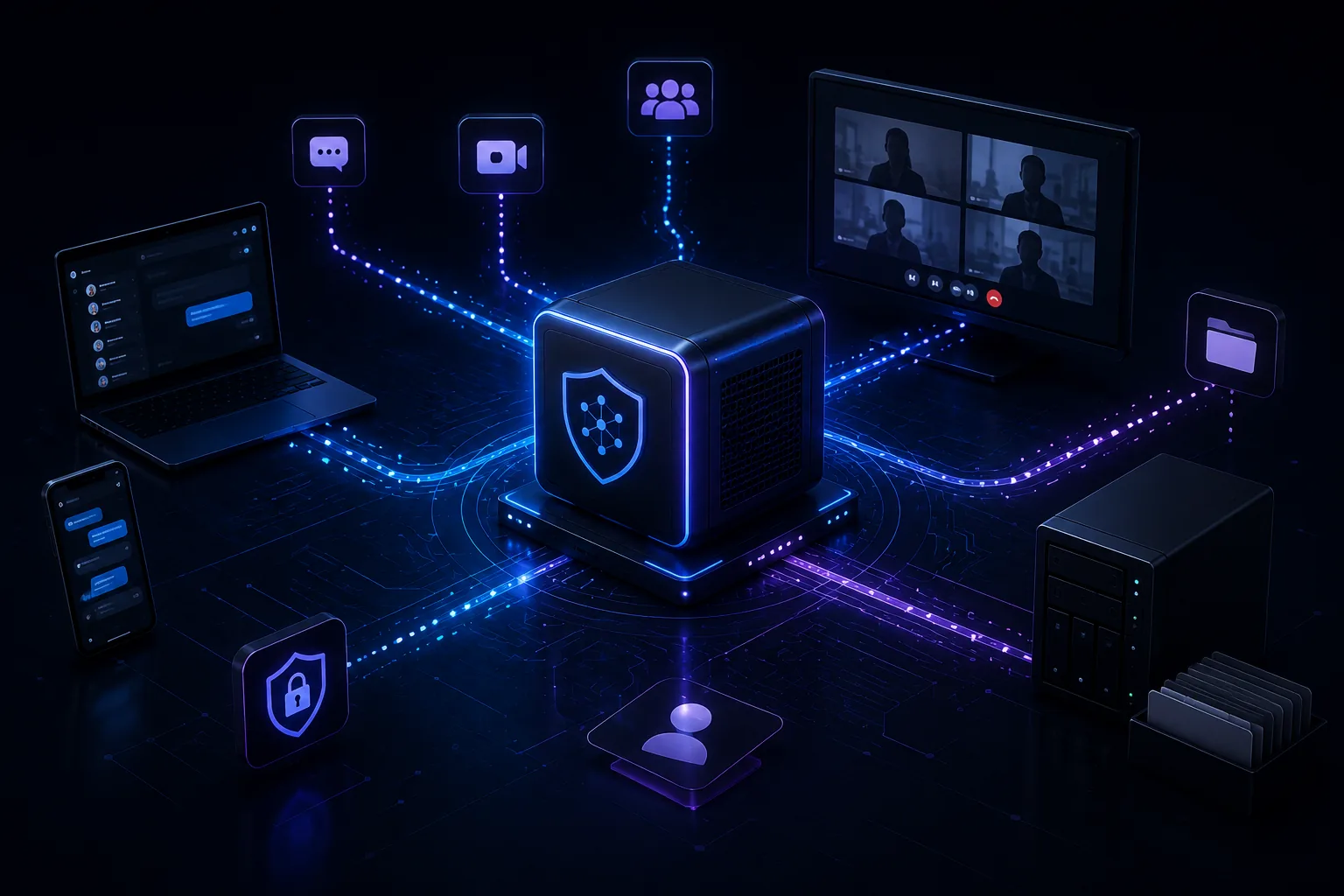
More than installing an application
Self-hosted communication means an organization runs messaging, meeting or collaboration software in an environment it controls or delegates to a chosen operator. Installation is only the beginning. The operating model also includes identity, networking, updates, storage, backups, monitoring and recovery.
The user and operator experiences are different
Users should be able to message, meet and share files without understanding the underlying server. Operators need a separate administrative view of health, access, policies and backups. A platform that exposes infrastructure complexity to every employee has not solved the usability problem.
Questions that reveal the real model
- Does any essential function still require a vendor cloud control plane?
- Who controls user identity and administrative roles?
- Where are messages, files and meeting records stored?
- How are updates tested and deployed?
- Can backups be restored, not merely created?
- How are guests and clients restricted?
Self-hosted is not automatically secure
Private deployment changes who is responsible; it does not guarantee good security. Access policy, patching, monitoring and operational discipline still matter. Avoid claims such as “unhackable” or “100% secure.”
A workspace approach
ZNode treats communication as part of a broader private workspace, combining messaging and meetings with files, client access, administration and auditability on organization-controlled infrastructure.