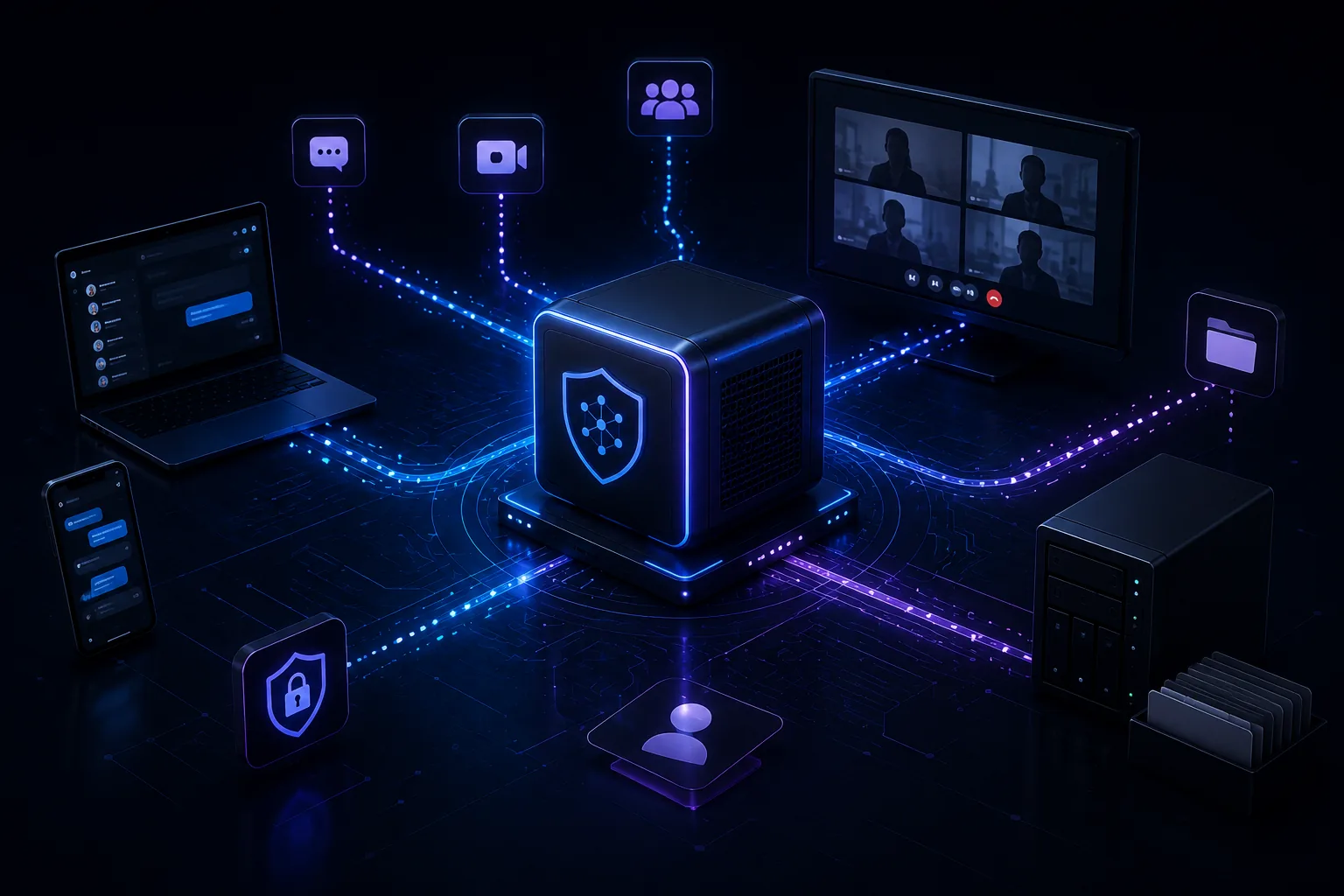
Legal collaboration is broader than document storage
Matter work includes messages, meetings, files, invitations and decisions involving lawyers, staff, clients and external advisers. Governance becomes difficult when those activities are distributed across personal messaging, conferencing and file-transfer accounts.
Begin with matter boundaries
A useful collaboration model separates internal and external access, limits each participant to relevant work and makes administrative changes inspectable. The platform should support everyday communication without giving clients visibility into internal teams or unrelated matters.
Questions for a platform review
- Can messaging, meetings and files remain in one governed environment?
- Are client and internal roles clearly separated?
- Who can invite, suspend or remove participants?
- Are sensitive administrative actions auditable?
- Where does the service run and who operates it?
- How are backup, recovery and continuity tested?
Avoid certification shortcuts
No collaboration product makes a firm compliant by itself. Regulatory, professional and contractual duties depend on jurisdiction and working practice. Vendors should not invent certifications or promise absolute security.
Private deployment as one option
Firms that prioritize infrastructure control may consider an organization-controlled workspace. ZNode combines messaging, meetings, files, restricted client participation and administrative governance in a private deployment model. A managed SaaS platform may still be preferable when the firm prioritizes ecosystem integrations and outsourced operations.